Bathroom Exhaust Fan Installation: Cost, Ducting and Compliance
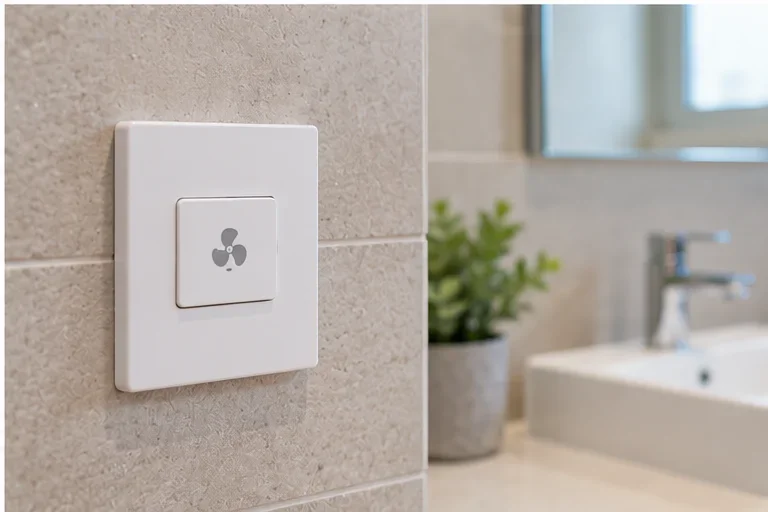
A good bathroom exhaust fan is one of those things you only notice when it is missing. The mirror stays fogged long after your shower, the ceiling paint starts to bubble, and black spots appear in the corners of the grout.
Many Adelaide homes, particularly older ones, have a fan that is too small, vents straight into the roof cavity, or has quietly stopped working. This guide covers what a proper bathroom exhaust fan installation involves: where the air has to go, the rules for wiring in a wet area, and what affects the cost.
Why Your Bathroom Fan Matters More Than You Think
Every shower releases a lot of warm, moist air. If that moisture has nowhere to go, it settles on cold surfaces such as ceilings, walls, mirrors and window frames. Over time, that leads to:
mould on ceilings, grout and silicone
peeling paint and swollen door frames
musty smells that cleaning does not fix
damp building materials in the ceiling and roof space
A properly sized and ducted fan removes the moist air before it can do that damage.
Where the Fan Has to Vent
This is where many installations go wrong. A fan only does its job if the air it pulls out actually leaves the house.
Venting into the roof cavity is a common shortcut - Older installations often blow moist air straight into the roof space. That just moves the problem: the moisture condenses on timber, insulation and the underside of the roof. Under the current National Construction Code, exhaust from a bathroom should discharge directly outside, or into a roof space that has the required ventilation openings.
Good ducting makes the difference - Most bathroom fans in Adelaide homes are ceiling mounted, with a duct running through the roof space to one of these outlets:
an eave vent
a wall vent
a roof vent with proper weatherproofing
Things we look at when planning the duct run:
Length and bends - Every extra metre and every bend reduces airflow, so a shorter, straighter run performs better.
Duct type - Rigid or semi-rigid ducting holds its shape better than cheap flexible duct, which can sag and trap water.
Backdraft protection - A damper stops outside air, dust and insects coming back in.
Fall - The duct should run slightly towards the outlet, so condensation drains out rather than back into the fan.
A powerful fan connected to a poor duct can perform worse than a modest fan with a well-planned run.
Choosing the Right Fan Size
Fan capacity is measured in litres per second (L/s). The National Construction Code sets a minimum flow rate of 25 L/s for a bathroom or toilet.
Treat that figure as a floor, not a target. A bathroom with a hot, steamy shower, or a larger room with a high ceiling, usually benefits from more capacity. We match the fan to the room size, how the bathroom is used and the length of the duct run. That way the fan performs as rated once it is installed, not just on the box.
Compliance: The Rules for Wiring in a Wet Area
Bathrooms are wet areas, so the electrical rules are stricter than in other rooms.
Wet area zones - The Australian wiring rules, AS/NZS 3000, divide the space around a bath and shower into zones. These zones limit:
where switches, powerpoints and light fittings can go
what type of equipment can be installed in each zone
the level of water resistance, or IP rating, the equipment needs
Getting this wrong is a genuine shock risk, not just a compliance problem.
Run-on timers - If your bathroom has no openable window, the NCC requires the exhaust fan to switch on with the light. It must then keep running for 10 minutes after the light is turned off. Many modern fans have a timer built in. Otherwise, a timer module can be fitted behind the switch.
Licensed work only - Fixed wiring to an exhaust fan must be done by a licensed electrician. In South Australia, your electrician should give you a certificate of compliance for the work. Keep it with your house records, as it is useful when you sell or make an insurance claim.
Replacing a Fan vs a New Installation
Replacing an existing fan is usually the simpler job, as long as:
the wiring is in good condition
the ceiling opening suits the new unit
the duct actually leads outside
If the old fan was venting into the roof cavity, the replacement is a good time to fix that.
A new installation where there was no fan before involves more work. That means new wiring from a suitable circuit, a switch or timer, a new ceiling opening, and a full duct run to an outside vent. It is a common job during renovations, when the ceiling and walls are already open.
What Affects Bathroom Exhaust Fan Installation Cost
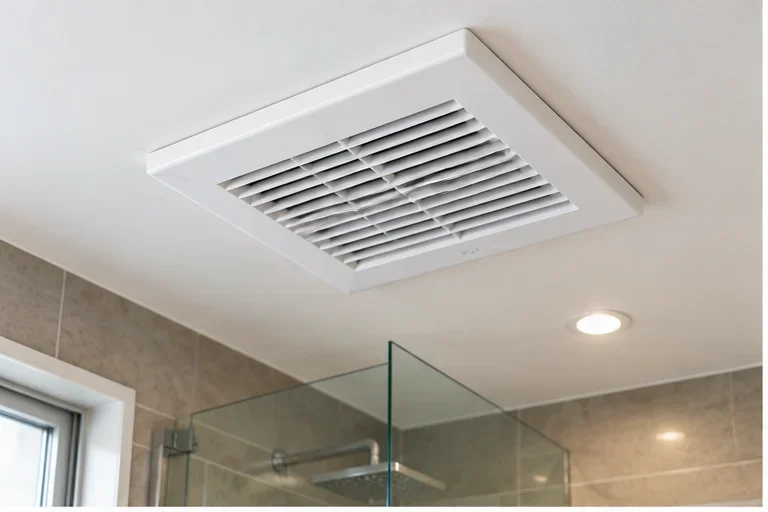
Bathroom exhaust fan installation cost depends mostly on access and how far the air has to travel. The main factors are:
Replacement or new install - Using existing wiring and an existing opening keeps costs down.
The fan itself - Basic units cost less than quiet, high-flow or combined fan, light and heater units.
Ducting and the outlet - A short run to an eave vent is simpler than a long run to a new roof penetration.
Roof space access - Tight or low roof spaces take longer to work in.
Switching - Adding a run-on timer, a separate switch or a humidity sensor adds parts and time.
Making good - Patching an old ceiling hole, or moving the fan to a better position.
We give detailed, upfront quotes before any work starts, so you know exactly what you are paying for.
Signs Your Current Fan Is Not Doing Its Job
Not sure whether your fan needs attention? Watch for these signs:
The mirror stays fogged for a long time after a shower.
Mould keeps coming back on the ceiling, even after cleaning.
The fan is noisy, rattles or barely moves air.
A sheet of toilet paper held up to the grille does not get pulled in.
You are not sure where the fan vents to, or suspect it stops in the roof space.
Book Your Bathroom Exhaust Fan Installation
If your bathroom is struggling with steam, mould or a tired old fan, our licensed electricians can help. Wescombe Electrical is proudly South Australian owned and operated, servicing homes across Greater Adelaide. We size the fan correctly, duct it to the outside and wire it to the Australian standards for wet areas.
Find out more about our exhaust fan installation and fan services, or contact us for an upfront quote. You can also call us on 1300 640 424.
Frequently Asked Questions
1. How much does bathroom exhaust fan installation cost in Adelaide?
Bathroom exhaust fan installation costs depend on whether you are replacing an existing fan or installing a new one. The fan type, ducting distance, roof access, wiring requirements and additional features, such as a run-on timer, can also affect the total cost. An upfront quote helps clarify the cost for your bathroom.
2. Does a bathroom exhaust fan need to vent outside?
A bathroom exhaust fan should discharge air directly outside or into a roof space that meets the applicable ventilation requirements of the National Construction Code. Venting moist air into an inadequately ventilated roof cavity can contribute to condensation, mould and damage to insulation or timber.
3. What size exhaust fan do I need for my bathroom?
The right bathroom exhaust fan depends on the room size, ceiling height, shower use and ducting layout. Fan capacity is measured in litres per second (L/s), and the National Construction Code specifies minimum exhaust flow rates for bathrooms and toilets. A licensed electrician can help select a fan with suitable airflow for your space.
4. Does a bathroom exhaust fan need a run-on timer in Australia?
Under the National Construction Code requirements described in this guide, a bathroom without an openable window requires an exhaust fan that operates with the light and continues running for 10 minutes after the light is switched off. A fan with a built-in timer or a suitable timer module can provide this function. Requirements should be checked against the applicable code and building circumstances.
5. Can I install or replace a bathroom exhaust fan myself?
Replacing a fan may appear straightforward, but fixed electrical wiring must be carried out by a licensed electrician. Bathroom installations also need to comply with applicable wet-area electrical requirements, including AS/NZS 3000. An electrician can check the wiring, fan location, ducting and switching to help ensure the installation is safe and compliant.