
Buying an electric vehicle is exciting. Working out how to charge it at home is where the questions start. Can you just plug it into a power point? Do you need a special charger? Will your switchboard cope? And what about the solar panels already on your roof?
This guide covers what Adelaide homeowners need to know before booking a home EV charger installation, so you can make the right choice for your car, your home, and your budget.
Your Three Charging Options at Home
A standard power point - Most EVs come with a portable cable that plugs into a normal 10 amp power point. It works, but it's slow. It suits people who drive short distances and can leave the car plugged in overnight. Only use a power point in good condition, and never run the car off an extension lead or power board.
A dedicated 15 amp outlet - Some portable chargers can use a 15 amp outlet, which charges a bit faster. This needs a licensed electrician to install a dedicated outlet on its own circuit near where you park.
A wall-mounted EV charger - This is the option most EV owners end up choosing. A wall charger is hardwired on its own circuit from your switchboard and charges much faster than a power point. Many models also have smart features, like scheduling and solar integration.
Single Phase or Three Phase?
Before choosing a charger, find out what power supply your home has. Most Adelaide homes are single phase, while some newer and larger homes have three phase power.
This matters because a three phase supply can run a faster charger, while a single phase home is limited to a lower charging speed. A single phase home can still charge an EV comfortably overnight for most daily driving. Your electrician can tell you which supply you have by looking at your meter box.
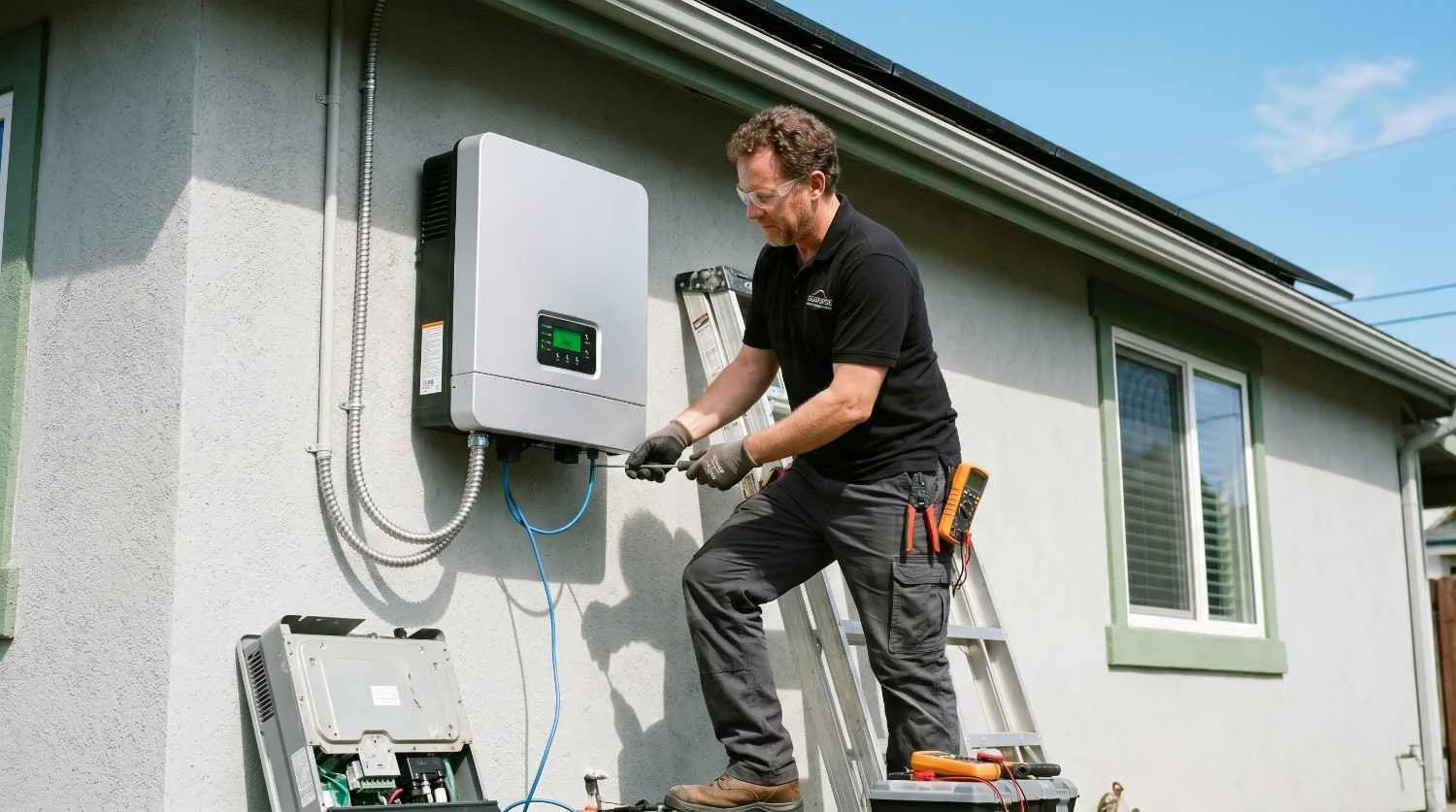
Can Your Switchboard Handle It?
An EV charger is one of the biggest electrical loads in a home, often running for hours at a time. Before installation, a licensed electrician should check:
Spare capacity in your switchboard for a new dedicated circuit
The age and condition of the switchboard
Safety switch protection, since the charger circuit needs its own RCD protection
Your total household load, especially if you also run ducted air conditioning, a pool pump, or an electric hot water system
In older Adelaide homes, it's common to find a switchboard that's full or outdated. Upgrading it at the same time as the charger is often the safest option, and it means the job only happens once.
SA Power Networks Approval
In South Australia, many home EV charger installations need to be lodged with SA Power Networks. Your electrician submits the application on your behalf before installing the charger and closes it out once the work is done.
This is part of making sure the local network can support your charger. A licensed electrician who does this work regularly will handle it for you, so it shouldn't hold up your installation.
Charging with Solar
Adelaide gets plenty of sun, and many homes already have rooftop solar. Pairing your EV charger with solar is one of the best ways to cut the cost of driving.
A solar-compatible smart charger can watch how much power your panels are producing and adjust the charging rate to use excess solar during the day. This works well if your car is at home during daylight hours, such as on weekends or if you work from home.
If you're mostly charging overnight, a time-of-use electricity plan with cheaper off-peak rates may suit you better. Some SA plans also offer cheaper rates in the middle of the day, which lines up well with solar and daytime charging. Check with your retailer about which plan fits your routine.
If you're thinking about adding solar or a battery at the same time, plan the whole system together so everything works as one setup.
What Affects the Cost of Installing an EV Charger
The total EV charger cost in Australia comes down to two parts: the charger itself and the installation. Charger prices vary with brand, power rating, and features like solar integration and app control.
Installation costs depend on:
Distance from the switchboard to where the charger will be mounted. A garage next to the meter box is quicker than a carport at the other end of the property.
Cable runs through walls, roof space, or underground
Single phase or three phase supply and the charger you choose
Switchboard upgrades if your current board doesn't have room or isn't up to standard
Outdoor installation, which needs weatherproof mounting and cabling
The best way to get an accurate price is an on-site look at your switchboard and parking area. Photos of your meter box and where you park help get the process started.
Where Should the Charger Go?
Think about where you park every day and which side of the car the charging port is on. Mount the charger close enough that the cable reaches without stretching across walkways.
For outdoor installations, choose a charger rated for outdoor use and consider some shelter from direct sun and rain. In coastal suburbs like Seacliff, Brighton, and Glenelg, salt air is tough on outdoor equipment, so a well-sealed unit and corrosion-resistant fittings are worth the extra thought.
Why You Need a Licensed Electrician
A wall-mounted EV charger must be installed by a licensed electrician. It involves a dedicated circuit, correct cable sizing, safety switch protection, and compliance with Australian standards. Once the work is done, you should receive a Certificate of Compliance for your records.
Choosing an electrician who also understands solar is a real advantage, since they can set up the charger to work with your existing system. Our residential electrician services in Adelaide cover the switchboard checks, upgrades, and wiring an EV charger needs, with a detailed quote before any work starts.
Get Your Home EV Ready with Wescombe Electrical
Wescombe Electrical is a South Australian owned and operated electrical and solar business serving homes across Greater Adelaide. We'll check your switchboard and power supply, recommend a charger that suits your car and solar setup, and give you an upfront quote with no hidden fees.
Ready to charge at home? Contact Wescombe Electrical to book your home EV charger installation, or call us on 0421 655 753.
Frequently Asked Questions
1. How much does home EV charger installation cost in Adelaide?
The cost depends on the charger type, power supply, distance from the switchboard and wiring requirements. Switchboard upgrades and outdoor installations can also increase the overall installation cost.
2. Can I install a home EV charger with a single-phase power supply?
Yes. A single-phase power supply can support a home EV charger, typically up to 7kW. This is suitable for overnight charging for most everyday driving needs.
3. Do I need to upgrade my switchboard to install an EV charger?
Not always. An electrician will check your switchboard's capacity, condition and available circuit space. An upgrade may be required if it cannot safely support the additional electrical load.
4. Can a home EV charger work with existing solar panels?
Yes. A solar-compatible smart EV charger can use excess electricity generated by your solar panels to charge your vehicle. This can help reduce reliance on grid electricity.
5. Do I need a licensed electrician to install a home EV charger in Adelaide?
Yes. A wall-mounted EV charger requires installation by a licensed electrician. They will ensure the dedicated circuit, safety switch protection and wiring meet the relevant electrical requirements. They can also handle the necessary SA Power Networks notification.